
When a family foundation is created, the founder is required to endow it with assets to cover the founding fund, of a value specified in the statutes and not lower than PLN 100 000. Assets contributed to cover the founding fund may not be returned to the founder – either in whole or even in part. Beyond the moment a family foundation is created, assets may also be contributed to the foundation during its lifetime – in the form of a donation or an inheritance.
Assets contributed in this way by:
• the founder or the founder’s spouse, descendants, ascendants or siblings – are deemed to have been contributed by the founder;
• other persons – are deemed to have been contributed by the family foundation.
Where assets are contributed to a family foundation by a common descendant, ascendant or sibling of more than one founder, the assets are deemed to have been contributed by all of those founders in equal parts.
What are these rules for?
Above all, they serve to determine the proportion of the value of the assets contributed to the foundation. The proportion is determined each time assets are contributed to the family foundation. Information on the current proportions for each founder and for the family foundation must be recorded in the inventory.
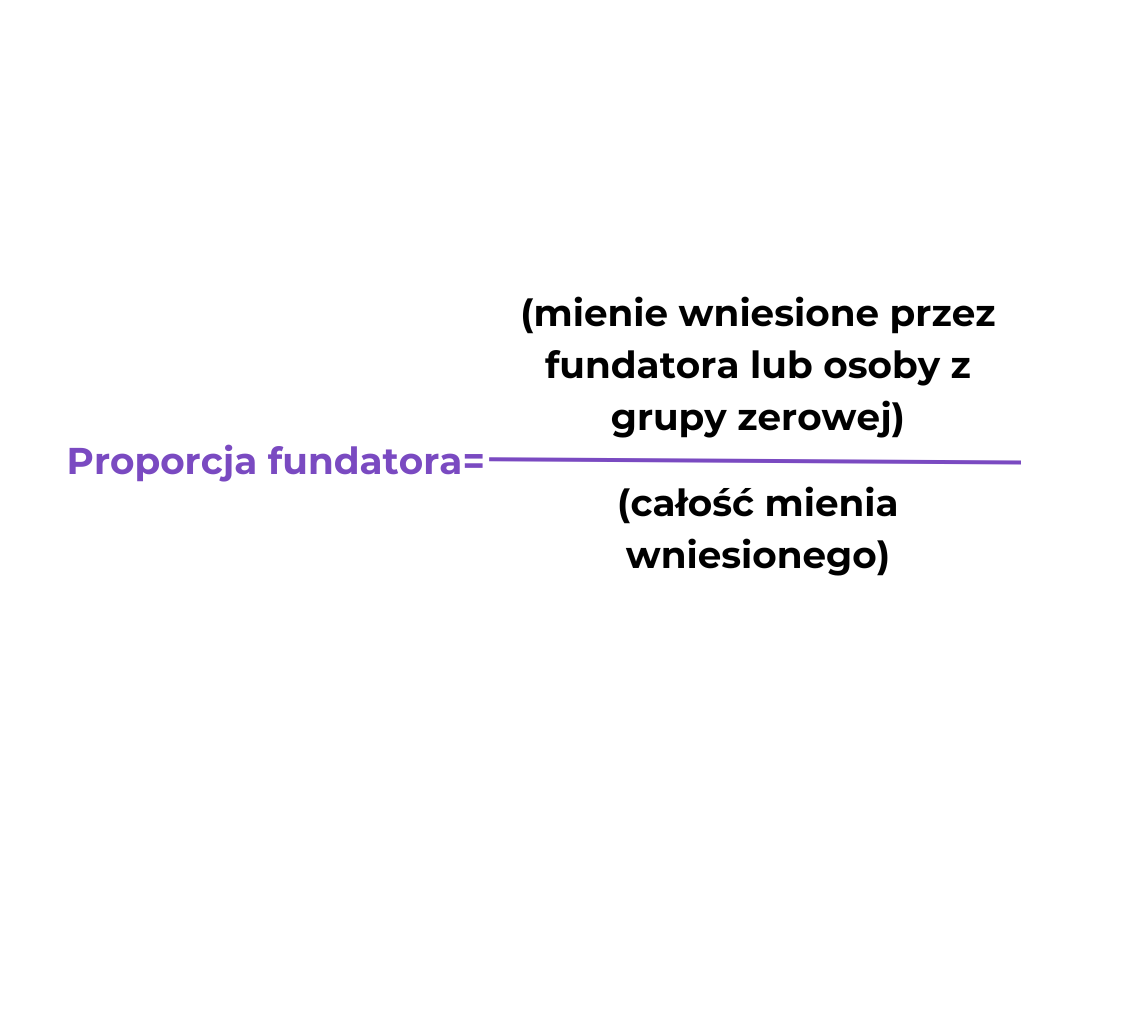
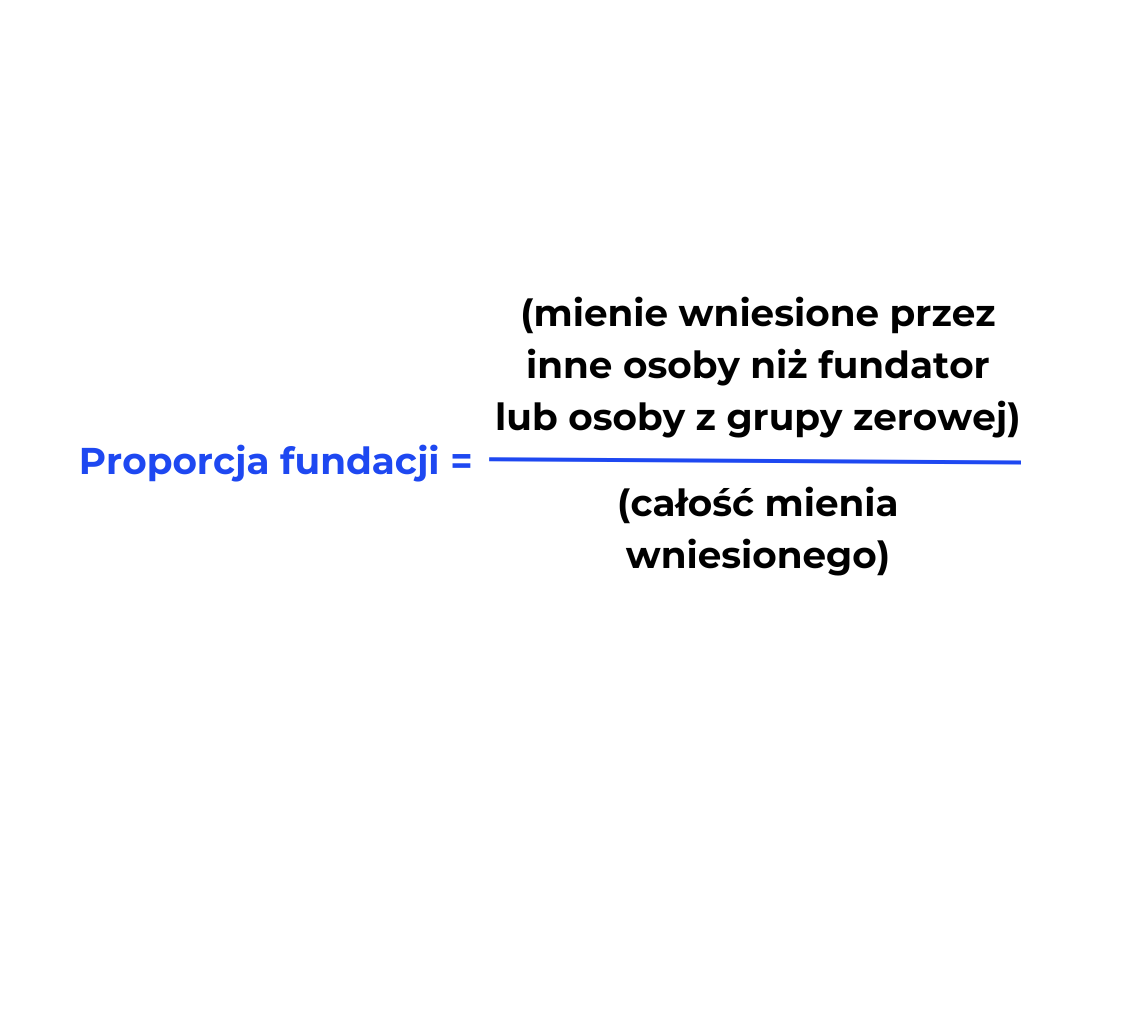
The proportion is the ratio which the sum of the value of the assets contributed to the family foundation attributable to that founder or to the family foundation bears to the sum of the value of the assets contributed by all the founders and the family foundation.
Each time assets are contributed to the Foundation, the proportion must therefore:
(i) take into account the assets contributed to the Family foundation by you personally or by your closest relatives (spouse, descendants, ascendants or siblings) – classifying them as assets contributed by the founder, and
(ii) the assets contributed by other persons – classifying them as assets contributed by the family foundation
The proportion for each founder is calculated using the formula below.
The foundation’s proportion, in turn, can be determined as
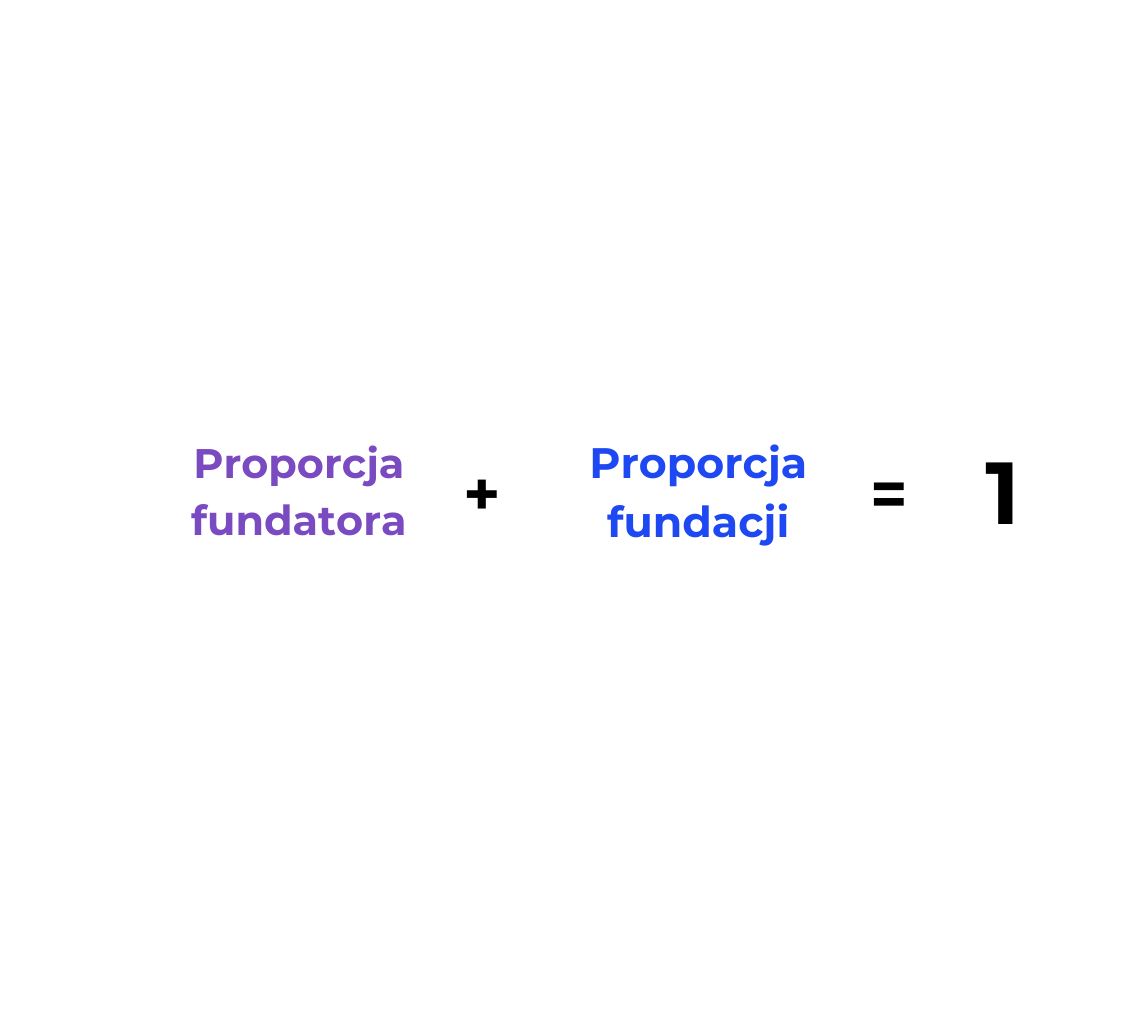
As a rule, the founder’s proportion and the foundation’s proportion should sum to one.
Why do beneficiaries need the proportion?
The proportion so determined is then used to establish how benefits provided to the foundation’s beneficiaries are taxed for PIT purposes. As a rule, beneficiaries belonging to the zero group are exempt from PIT on the benefits they receive.
The PIT exemption applies, however, only to the part of the revenue:
i) of the founder or a person in the founder’s zero group, entitled to receive assets in connection with the dissolution of the family foundation,
ii) of a beneficiary who is the founder or a person in the founder’s zero group
– corresponding to that proportion [the founder’s proportion], as at the date on which they derive the revenue.
The most current proportion is the one determined on the most recent contribution of assets to the foundation.
Correctly calculated proportions recorded in the inventory of assets are therefore the basis for determining the PIT treatment of beneficiaries’ benefits.
Example of determining the proportion
Let us assume that, according to the inventory of assets, the proportion of the assets contributed to the family foundation by the founder is 100%, and by the family foundation 0%.
| Founding fund [founder] | 100,000 |
| Founder’s asset proportion | 100% |
| Foundation’s asset proportion | 0% |
These proportions will remain intact even after the founder or the founder’s spouse, descendants, ascendants or siblings contribute further assets to the family foundation, since those assets will be deemed to have been contributed by the founder. This is illustrated in the table below.
| Assets contributed by the founder’s descendants | 50,000 |
| Founder’s asset proportion | 100% |
| Foundation’s asset proportion | 0% |
| Taxation of benefits paid to the founder’s children | 100% exempt from PIT |
After the founder’s descendants contribute assets, the proportion will still be 100% of the assets contributed by the founder to 0% of the assets contributed by the family foundation. All distributions to beneficiaries in the founder’s zero group will be exempt from PIT.
Let us now assume that assets are then contributed to the foundation by a person from outside the founder’s closest family circle – his brother-in-law. What will the proportion look like then?
| Assets contributed by the founder’s brother-in-law | 150,000 |
| Founder’s asset proportion | 50% |
| Foundation’s asset proportion | 50% |
| Taxation of benefits paid to the founder’s children | 50% exempt from PIT |
Once the brother-in-law has contributed the assets, the asset proportion changes. The assets contributed to the foundation by the brother-in-law are treated as adding to the foundation’s own assets [they increase the foundation’s proportion]. The proportion attributable to the founder himself therefore falls. The assets contributed by the founder and deemed to have been contributed by the founder [contributed by his descendants] total 150,000. Similarly, the assets contributed by the founder’s brother-in-law [deemed to be the foundation’s assets] also amount to 150,000. In this simple example, the split is therefore 50% each.
Assuming that, after the brother-in-law’s contribution, the founder’s children receive a further benefit, it will enjoy the PIT exemption only as to 50% [in line with the founder’s asset proportion, as persons belonging to his 'zero group’].
Complicated? See how we can help:
we keep the foundation’s accounting and tax books, and help establish the chart of accounts and create the reporting structure for the foundation’s governing bodies
we advise on all tax aspects of setting up the foundation and of the business activity it carries on
as part of our cooperation with lawyers involved in drafting the family foundation legislation, we will help you open and register a family foundation